
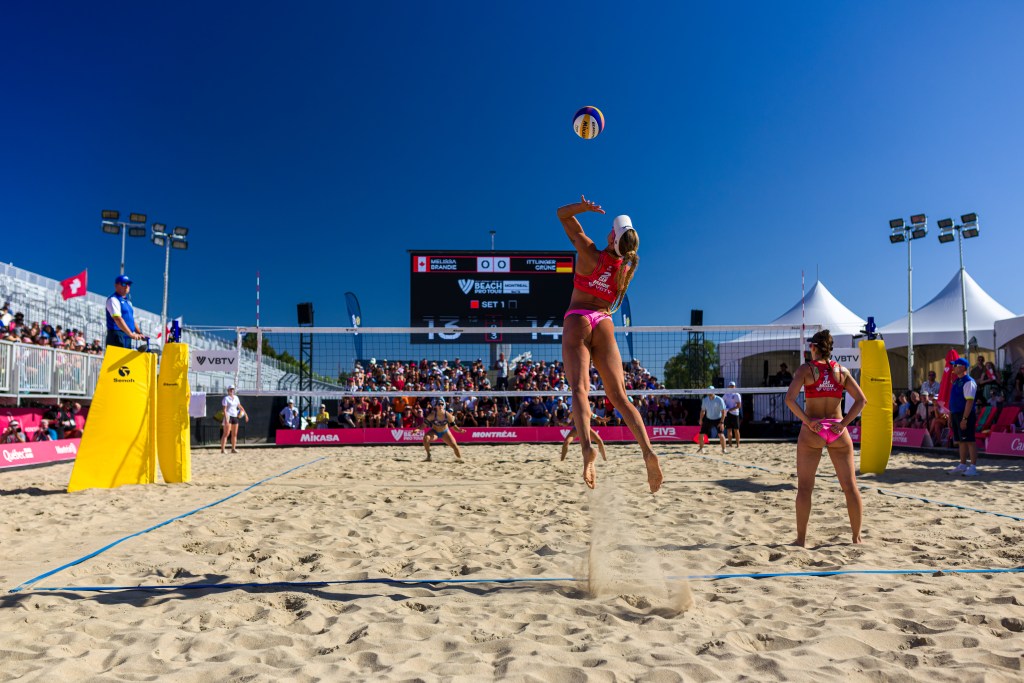
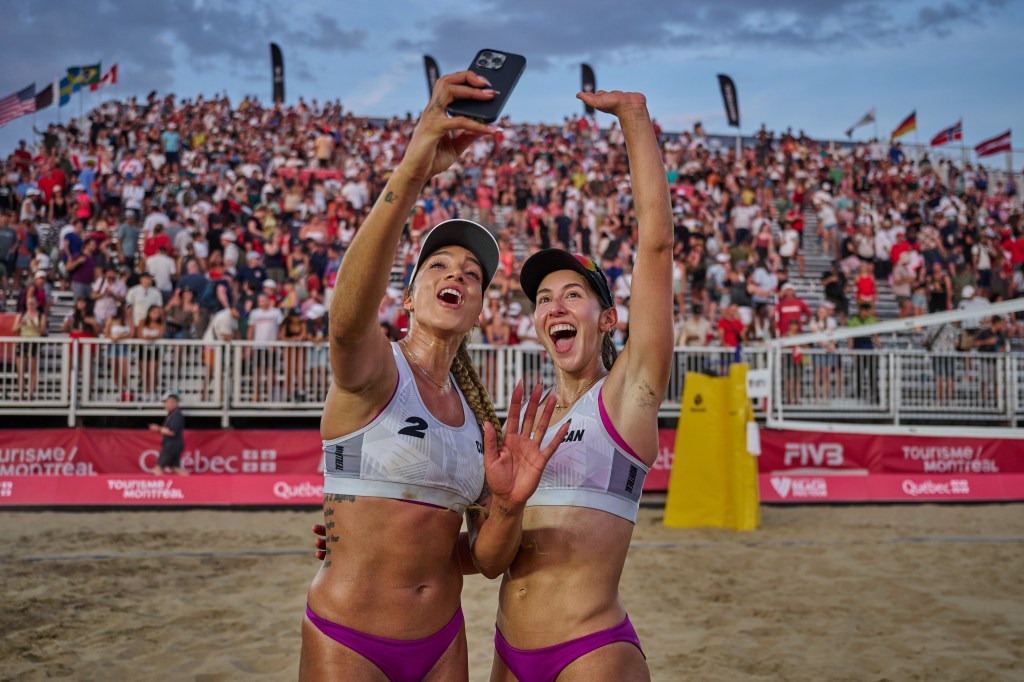
Beach Pro Tour is back in Montréal for 4 years. This year, the tournament faced the highest temperatures in August with several days up to 30 degrees celcius. Melissa Humana–Paredes silver medal at Paris 2024 Olympic Games tells Sport+Eco how her journey began as a sustainable athlete. – Interview
How Climate Change Affects Athletes: Insights from Beach Pro Tour
The heatwave sweeping across much of Quebec has already pushed the number of days over 30 °C this summer to 15 — well above seasonal averages — and summer isn’t over yet. This raises important questions: How is the sport event industry adapting? How is this impacting athletes’ health and safety? What role can athletes play?
Melissa Humana-Paredes explores these questions with Sport+Eco. She is not only an Olympian and Canada’s first-ever world champion, but also a member of Green Sports Day Canada, working toward a more sustainable sport industry. She explains how she began this journey and what inspired her along the way — a wonderful conversation that goes beyond the environment.
The Beach Pro Tour, organized by Beach Volleyball Événement, returns to Montréal after one-year absence. Montréal will be the only North American stop on the Elite16 circuit, which includes 11 tournaments around the world. This international tournament is in good hands, as the organizing committee also organizes the Grand Prix Cycliste de Québec et de Montréal (GPCQM). After the interview, we take a closer look at the sustainable initiatives they have implemented for this event, held right on the Circuit Gilles-Villeneuve at Parc Jean-Drapeau — a great example of sharing resources with the Parc.
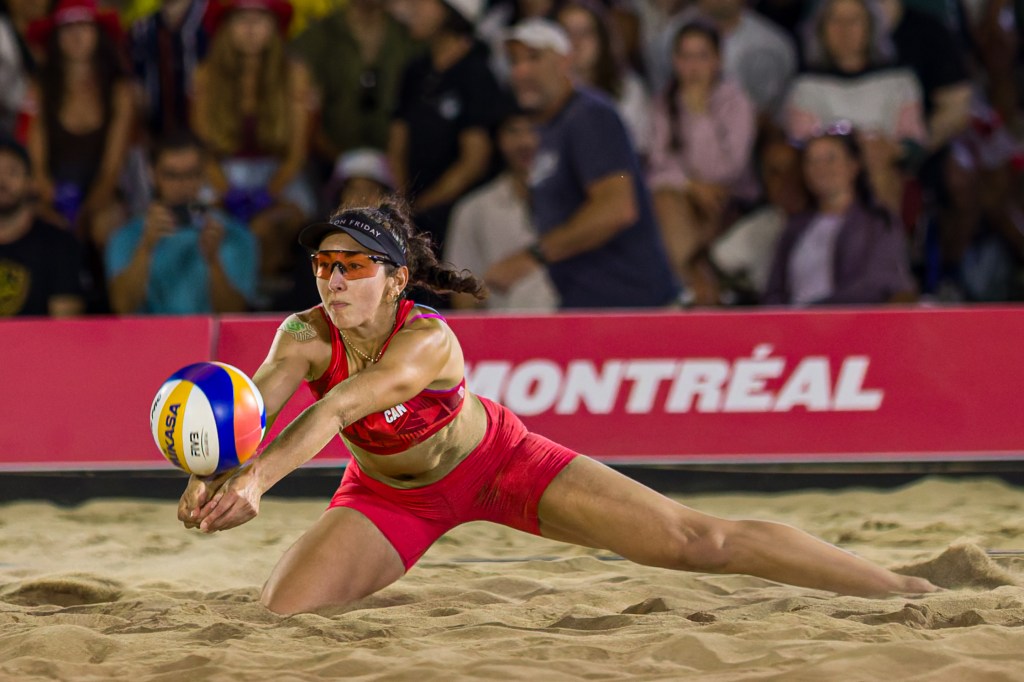
SPORT+ECO: What does being an “eco-conscious athlete” mean to you? Where does it come from?
Melissa: “When the journey hit for me was at the Tokyo Olympics, which was the hottest Olympics ever reported. Before the pandemic, all our conversations about preparation for Tokyo were around heat mitigation — how we could be best prepared for the heat. We had to keep our core body temperature down, prevent heatstroke, dehydration… It was all these different tactics to put a band-aid on the effects happening around us in the climate.
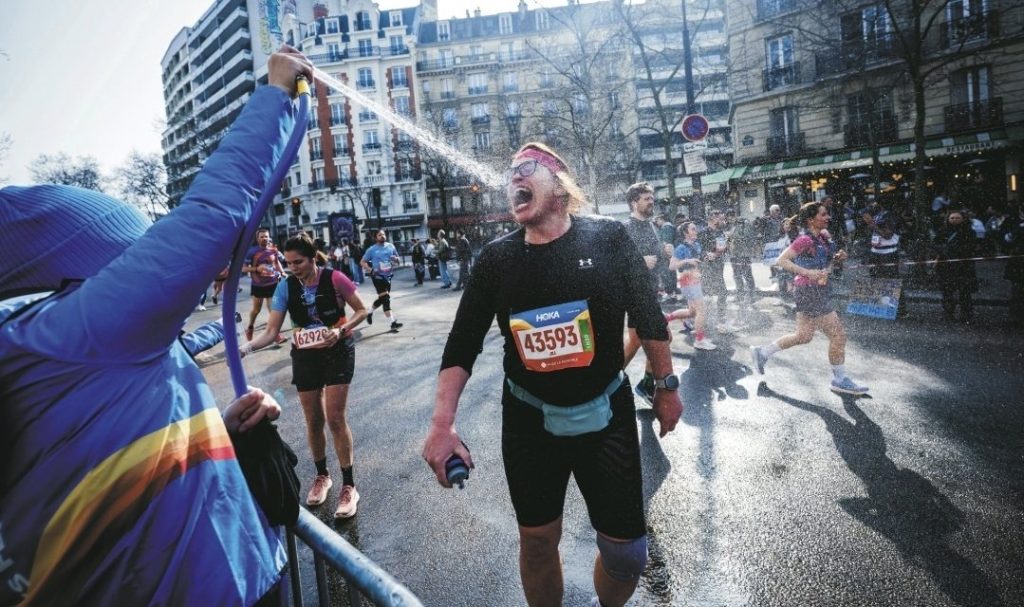
In Tokyo, it was so hot and humid. There were temperature checks at all our sports courts — 45 degrees Celsius with humidity. We were taking selfies saying “wooow look at how hot it is” and it didn’t dawn on me until I realized: “Why is this ok? How are we allowing this to happen?” We saw sports changing venues or times because it was too hot. For the marathon, they had to change location. For the women’s soccer gold medal match, they changed the time from day to night. These are things we never heard of before.
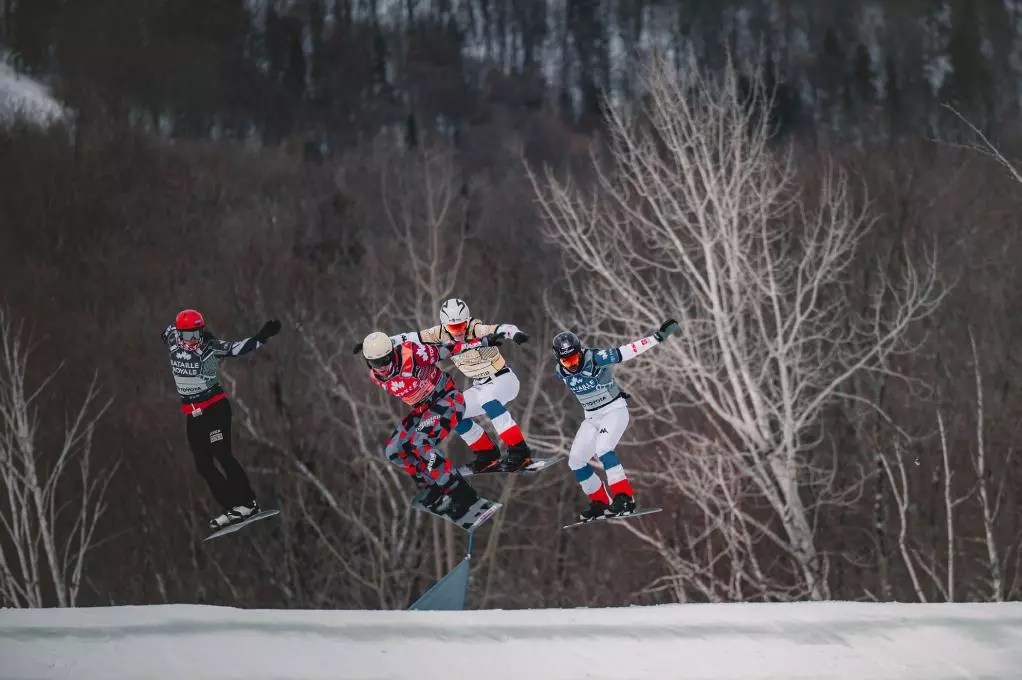
It’s not only affecting summer sports — it affects winter sports too. There are fewer places for skiers to find snow. Now there are times of the year where we cannot train in certain countries because it is just dangerous and unhealthy. That is why after Tokyo I started to immerse myself in communities like EcoAthletes and Racing to Zero.
There is a different need for everybody in this movement, whether you are an expert or just beginning — we need everybody. Everybody’s voices, opinions and actions, no matter how small. – Melissa Humana-Paredes
That’s how I found my place in this movement. It is important for the future of sport. We dedicate our whole lives to this as athletes, and it’s not something I thought would impact me as much as it has. These are part of the conversations now with the Canadian Olympic Comittee, where the planet is one of their main pillars.”
SPORT+ECO: Climate change can also impact our health.
Melissa: “Wildfires are happening all the time now. that changes the air quality and makes it unhealthy. When you are practicing outdoor sports you have to be conscious of what you inhale and air quality, it is all about danger and safety. When it comes to extreme heats, heatstroke and heat exhaustion are real for outdoor athletes. A lot of the things that we think about when we are preparing for extreme heat is how not to survive but how to also demand performances in this environment. You have to demand yourself as an athlete no matter the situation you are in, you have to overcome the odds and defeat the obstacles. But sometimes you forget that our health and safety is number one.”
“Whenever we start saying it is unusual, it is going to become the norm.”
Melissa Humana-Paredes
SPORT+ECO: With rising temperatures and more extreme weather, how is climate change already impacting you?
Melissa: “Tokyo Olympics opens my eyes. The more time passes, the more we are exposed to extreme weather, both high and low. There are more extreme thunderstorms or extreme rising of the sea water levels. Now the beaches are becoming smaller. There is less room to put courts on beaches.
Our season is shifting, we’re no longer just a summer sport. We might move tournaments to winter months in some countries because summers are too hot, or because it’s hurricane or tornado season in others. So it is changing our scheduling and how we are performing.
Because we are an outdoor sport we are so exposed to elements and are very vulnerable to them. It changed how we play and how we perform.”
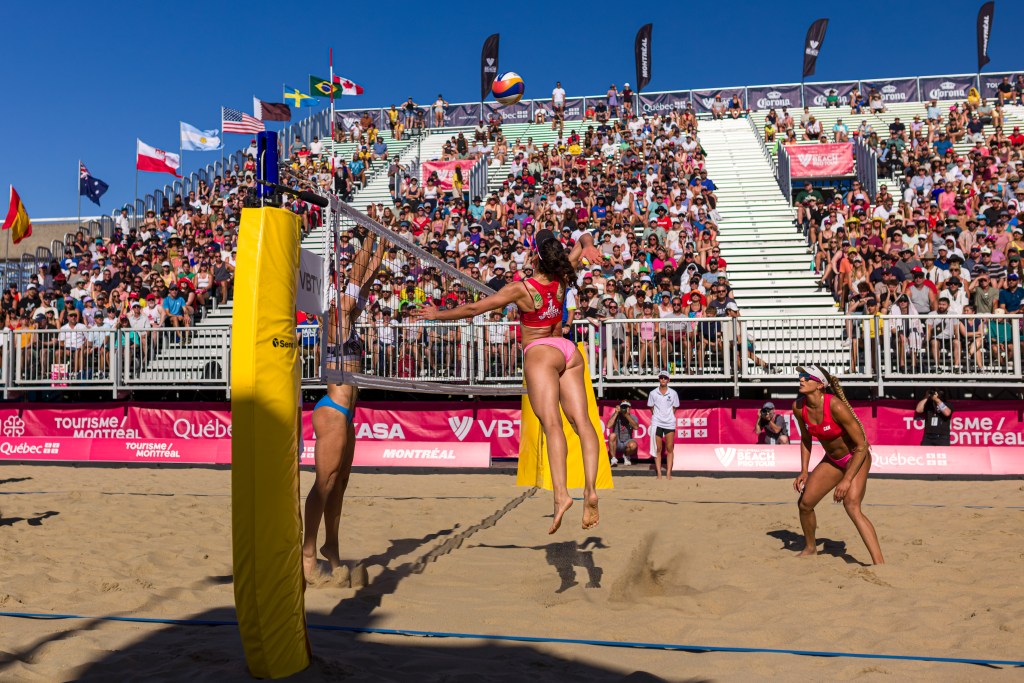
SPORT+ECO: Have you noticed a shift in how beach volleyball events, like the Beach Pro Tour, are integrating sustainability? Any initiatives that stood out to you?
Melissa: “It really depends on the organization and the host city’s own sustainability initiatives.
For instance, in Switzerland, they do a great job of being conscious and sustainable. One thing I notice a lot, is the use of plastic water bottles. When you’re traveling to many countries, you don’t always drink tap water like I do at home in Canada. Overseas, I’m more cautious for health and safety reasons, my body isn’t always used to the local water.
But in Switzerland, they have these beautiful glaciers and natural water pools. Athletes can just fill their bottles at little water stations around the town. It’s super refreshing, super clean. Having those options makes a big difference. It allows us to reuse bottles instead of relying on single-use plastic. Sometimes, we don’t have a choic, if plastic is all that’s provided, we have to use it. But when tournaments provide alternatives like aluminum bottles, cans, or compostable materials, it’s much better.
On a bigger scale, there’s also the fan experience. How will fans get to tournaments? Can they walk, take public transit, or carpool? Transportation is a huge factor, not just flying. For athletes too, walking to events is ideal, no waiting for shuttle buses or cars. Of course, it depends on the city layout. In Montreal, for example, walking isn’t always possible, or you can take the metro.
At the macro level, organizing committees are also thinking about how much we travel in a season. Grouping tournaments together helps. For example, if we go to Brazil, having two tournaments back-to-back it reduces flights and carbon emissions. Planning events by region, keeping them on the same continent, means athletes can stay longer and travel less.
So sustainability ranges from small things like reducing single-use plastics to big scheduling changes that reduce flights.«
SPORT+ECO: If you could change one thing in the way major events are organized, from a sustainability perspective, what would it be?
Melissa: “I think it’s great to be able to group events based on the continent you’re in, to have a tour that flows geographically, and to avoid crazy back-and-forth travel.
That matters both for athletes’ mental health and for our environmental impact. For me, one of the main drivers of my personal footprint is the number of flights I have to take. So finding ways to limit that is really important.
And of course, when we are at the event itself, I’d love to see more easily accessible options for fans and athletes. When setting up a tournament, sourcing local resources and materials is also key. Don’t ship things in from everywhere; instead, source what’s in the host city and keep things as local as possible.
Supporting those initiatives makes a big difference. »
SPORT+ECO: What message would you like to share with young athletes, and even organizers, who want to integrate sustainability into their sport?
Melissa: “Two things come to mind, because they’ve really helped me in my own journey.
The first: don’t let the fear of hypocrisy hold you back from getting involved or speaking out. I know that sometimes, when I share my sustainability initiatives or passion, I get comments like, “But you travel all the time, how can you talk about this?” And yes, it’s true, I travel a lot, and that does weigh on me.
But this is part of my job. I think about it all the time and try to find solutions to mitigate my impact.
There’s no perfect way to do this. It’s an imperfect journey, and everyone has to get involved in the capacity they can. We’re in a situation where every little bit helps. Meet the situation where you are, do the best you can, and don’t let criticism stop you.
“ If I let those negative comments stop me, I wouldn’t be here, I wouldn’t be involved, and I wouldn’t be making the connections that keep me passionate.” – Melissa Humana-Paredes
The second thing comes from my university days. There was a quote that stuck with me:
“What’s the most important thing you should be spending your time on? And if you’re not spending your time on it, why not?” – Melissa Humana-Paredes
For me, that answer was sustainability, helping the Earth and the planet. Even though it’s not my full-time job or career (I’m an athlete at heart), it’s my full-time passion. It’s something I think about every day. So I chose to run with it and find ways to get involved.
Those are my two main pieces of advice for anyone wanting to get involved in anything — but especially in sustainability.
SPORT+ECO: What is Green sports day Canada?
Melissa: I definitely want to highlight Green Sports Day Canada. It’s October 6 every year, it’s something I’m part of, along with you (James Guilbaud – founder of Sport+Eco), and along with an amazing group of other Olympians and experts and people in the sporting world and in the sustainability world. We’re coming together and bringing all of our knowledge and passions to spread awareness and to spark the conversation about sustainability in sport within Canada. I think it’s a real opportunity for us as Canadians and in the sporting world to be leaders in this and so it’s important to get involved in these conversations and to spread the message. It is not just for October 6, but year round, to have these conversations, and also engage. I think it’s really important to get involved and be leaders here. So I’m looking forward to it. I hope you are too.
Melissa’s words remind us that athletes are already feeling the impact of climate change in their daily lives and competitions. Her call for change is also a call for action from the entire sport community.
The Beach Pro Tour in Montréal is a good example of how organizers can take this responsibility seriously. Beyond the competition itself, the event is showing that sustainable choices are possible, and that small decisions can add up to a big difference.
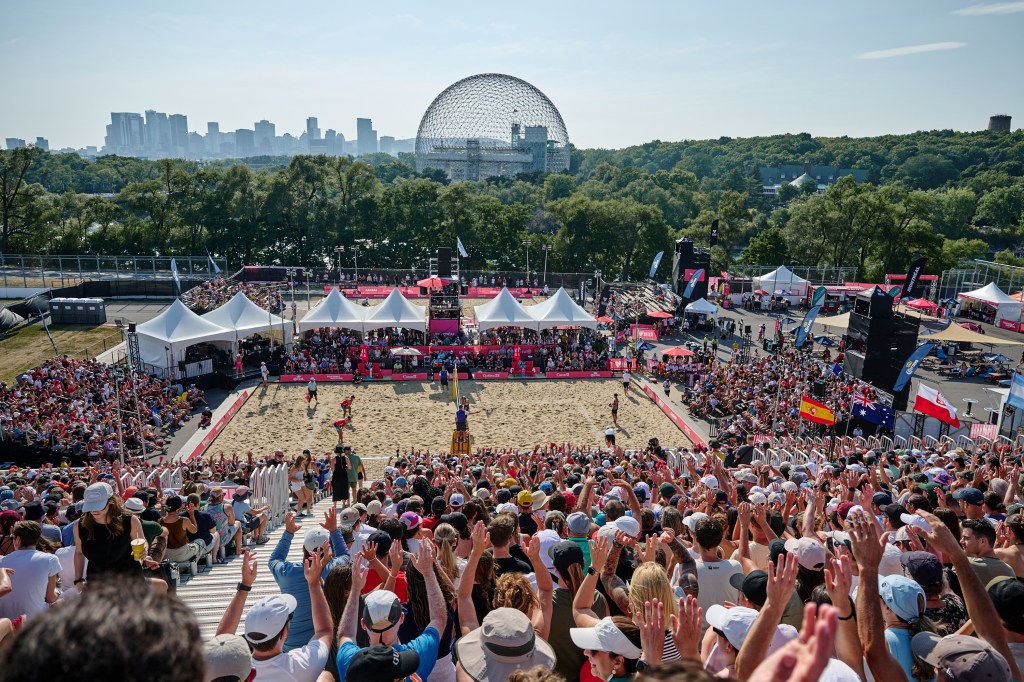
Sustainable Practices at Beach Pro Tour
First of all, Maxime Berthiaume, Directeur – Sport et Services aux événements at Beach Pro Tour, told us that mutualisation for the key word of this edition. Indeed, it is the first time that the Parc Jean-Drapeau is hosting another event on this part of the circuit, besides the Formula 1 Canada Grand Prix. It allowed the LOC to use the permanent bleachers at the « Épingle ». Another example of mutualisation is the use of a structure from another event, which avoided the need of building a new one.
The Beach Pro Tour team carefully evaluated all options, knowing that they would use most of the signage and equipment for four editions. This choice saves significant costs and resources.
Other actions include:
- A water station is available for spectators to refill their bottles. It has been built for the first edition and will be used in all event of the group, according to Maxime;
- Undated event decorations so they can be reused next year;
- One logo per signage, so panels can be reused every year if the same partnership continues. New panels are only created when new sponsors join, unlike mixed signage, which becomes obsolete;
- Sand comes from Ontario and it will be stored for use in future editions, in Montréal;
- Public transportation and bringing his own bottle is encouraged;
- Shuttle service provided for athletes between their hotel and the competition site;
- All food trucks are operated by local vendors.
Conclusion
Melissa Humana-Paredes and the Beach Pro Tour show that sport in Canada already has pioneers who are taking climate change seriously. Their actions prove that athletes and organizers can be leaders in building a better future for sport.
By rethinking how events are planned, by sharing resources, and by putting sustainability at the heart of competitions, they set an example that others can follow. Sport has the power to inspire change — and every organizer has a role to play.
Congrats Melissa and Brandie for the Gold medal, well deserved!




 Sport+Eco
Répondre à Le sport canadien passe au vert : le 6 octobre – Sport+Eco Annuler la réponse.