
Could 2042 represent one of the last major climate windows to host the Winter Olympic Games in Canada? This is the question we asked those who are directly concerned, the Canadian sport federations. What ski resorts, athletes, and federations are experiencing today is not just a feeling. Across Canada, the reality of winter sport is beginning to change.
Winter sports are directly exposed to climate change and are entering a period of transformation. Federations must now rethink their development models, training environments, and sometimes even the territories where their sports are taking place.
Shorter winters, unpredictable snow conditions, vulnerable ski resorts, and the need to adapt training schedules are already becoming real challenges. As temperatures approach +1.5°C above pre-industrial levels, winter sports are facing increasing vulnerability. At the same time, the Canadian Olympic Committee is analyzing several scenarios for hosting future Olympic Games. One possibility being explored is a Montreal–Quebec City bid for the 2042 Winter Olympics. This raises an important question: Do the Winter Olympic Games still have a future in Canada? And could 2042 be one of the last realistic windows to host them?
Giving a voice to Sport Federations
To better understand this reality, Sport+Eco decided to give the floor to the sport federations themselves. We chose to interview federations whose sports are mainly outdoors, because they are among the first to feel the impacts of climate change.
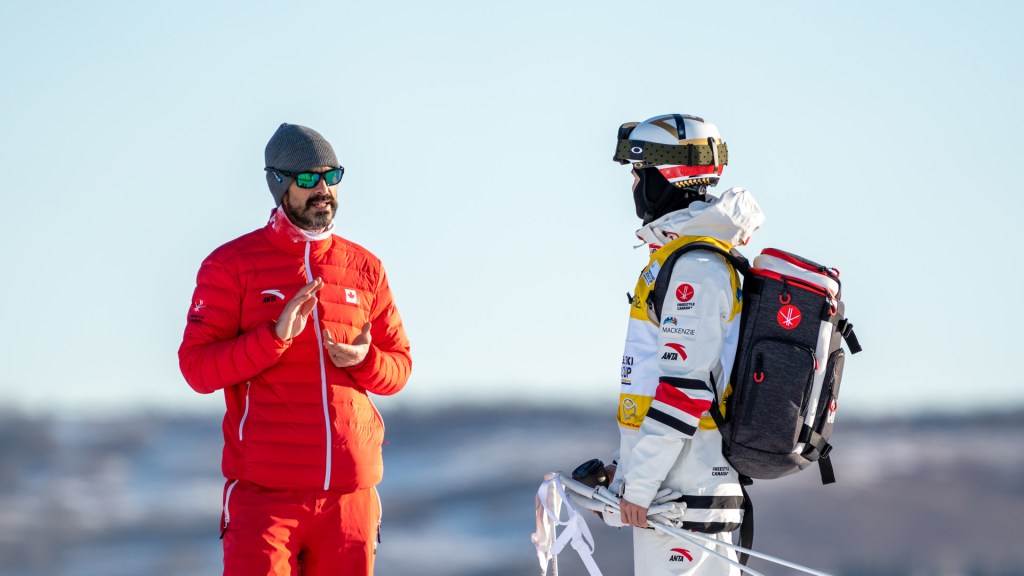
For this second article in the series, we interviewed Peter Judge, CEO of Freestyle Canada, whose sports are deeply connected to winter conditions.
This organization is responsible for developing athletes across the country and supporting the future of their sports at the national level.
Like many others, they are already adapting their calendars, training environments, and development strategies in response to increasingly variable winter conditions.
Through this series, Sport+Eco aims to offer a platform to the people who are directly facing these changes. The series is structured in three parts with an article in French about provincial federations in Quebec, an article on Canadian national federations, and an article about solutions and adaptations being developed by federations and other organizations.
By listening to this leader, we hope to better understand the challenges ahead for winter sports.
Why This Series?
This series was inspired by a radio spot led by James Guilbaud, founder of Sport+Eco, about winter sports and climate change. During these discussions, one observation became clear: the vulnerability of winter sports is no longer theoretical. It is already happening.
Having the opportunity to speak publicly about this issue was important. But it also felt essential to give a voice to those who are directly involved. Because the mission of Sport+Eco is simple: to highlight the people and organizations working to shape the future of sport.
You can listen to the four radio segments in the podcast “Effet Durable”, hosted by Maude Desbois:
- Session 1: Winter Olympics — Between lasting legacy and climate urgency
- Session 2: 2026 Winter Olympics in Milan and Cortina d’Ampezzo: sustainability, limits, and climate reality
- Session 3: The future of the Winter Olympic Games
- Session 4: Winter sports in Quebec and beyond: adaptation, resilience, and opportunities
Sport+Eco: Do the Winter Olympic Games still have a future in Canada after 2040?
During the Milan-Cortina Winter Olympics discussions, the Canadian Olympic Committee began analyzing several scenarios for hosting future Olympic Games in Canada.
One of the options being explored is a Winter Olympic Games bid around 2042, potentially organized jointly by Montreal and Quebec City.
With this possibility in mind, we asked national sport federations a simple question:
Do you believe Canada could still host the Winter Olympic Games in the 2040s?
Overall, the answer is optimistic. Freestyle Canada believes that winter sports still have a strong future in Canada. Despite the challenges brought by climate change, they remain confident that the country can continue to host major winter sports events in the future.
Peter Judge shared, “There have been years where conditions were very difficult. If you look back at the Salt Lake City Games, for example, there were periods where it would have been challenging to host competitions without proper preparation.”
“As individual organizations, we cannot solve climate change alone. But we can lead by example.” – Peter Judge
Sport+Eco: What are the main climate challenges your sport is facing today?
Like in Québec, for the PSOs, one of the biggest impacts we’re seeing is related to training environments.
Peter Judge, CEO, Freestyle Canada, said: “For example, glaciers have traditionally been very important training locations for athletes during the summer. Many teams used glaciers for training camps through July and August. But we are seeing more glacier closures, both in Europe and in North America. That has a significant impact because athletes lose access to reliable training environments.”
It reminds us of our interview with Philippe Marquis in this article : Philippe Marquis – Comment les entrainements des athlètes ont évolué face aux changements climatiques ? – Sport+Eco
Peter added : “At the elite level, it is sometimes manageable because organizations have more resources. But where it really has an impact is at the development level.
Young athletes and grassroots programs don’t have the same resources. In the past, it was common for kids growing up in mountain regions to ski from November through April or even May… That creates barriers for the next generation of athletes.”
Conclusion
The objective of this series is simple: to help create a reference space to discuss sport and the environment, but above all to provide a platform for sport stakeholders who are taking action or are directly facing the impacts of climate change.
In the interview with Peter Judge, we can see that the federation is concerned about young athletes and grassroots programs, as we can read: “ if young athletes cannot access consistent snow and training environments, it becomes more difficult to develop the next generation of high-level competitors.”
Freestyle Canada is truly committed to the environment, as they are the first of 3 NSOs to release their Environmental Sustainability Strategy as part of the NSO Sustainability Pilot Project.
In this context, several experts have raised the possibility of creating, by 2050, a limited number of “Olympic hubs” around world destinations that already have the needed infrastructures to host the Winter Games.
But beyond Olympic scenarios, one observation is clear, winter sports have become a leading indicator of climate change. As snow and cold become less predictable, entire disciplines are being forced to rethink their models.
The question is no longer whether winter is changing. The real question is whether our sports institutions will be able to adapt at the same pace.



Publié par

 Sport+Eco
Laisser un commentaire