
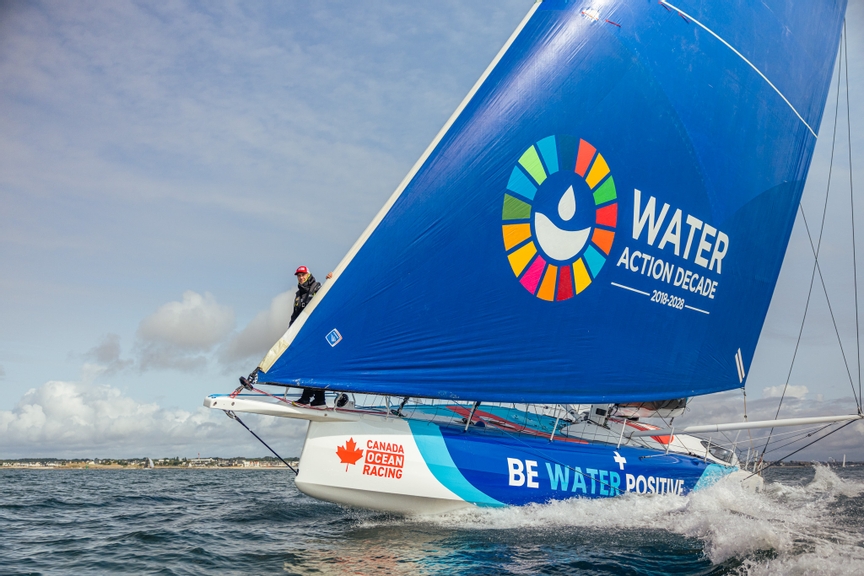
In 2026, Sport+Eco aims to give a greater voice to people across the sports sector to better understand their perspectives on climate change and the future of sports. Scott Shawyer is a Canadian skipper pursuing an ambitious dream. He wants to become the first Canadian to complete the legendary Vendée Globe. But for Scott, ocean racing is about more than performance; it is using his sailing platform to raise awareness about one of the planet’s most overlooked environmental challenges: water.
“Environmental sustainability is becoming a much bigger conversation than it was even a few years ago.” – Scott Shawyer
Why is water so important?
For Scott Shawyer, water surrounds him every day at sea, and it can quickly become a matter of survival. Scott Shawyer mentioned: “Many Canadians think freshwater is endless. But if water were truly limitless, you could walk down to your harbour and drink directly from it. Water must be treated, and the more pollution we create, the more treatment is required. Canada is fortunate to have abundant freshwater, but we shouldn’t take it for granted.” Scott added: “People can save money and reduce environmental impact simply by filling a reusable bottle instead of buying plastic water bottles.”
In Quebec, the month of June has been officially proclaimed as Water Month since 2017. The goal is to educate the public, raise awareness about water-related issues, and promote the sustainable management of this resource. This is exactly what Sport+Eco does through this media outlet and why we decided to interview Scott Shawyer, whose sport is fully related to water, as a skipper.
As the sports industry continues to strengthen its efforts to reduce its environmental footprint, the issue of water use often sparks debate not only in the organization of sporting events, but also in our everyday consumption habits.
Canada is frequently described as a water-rich country because of its vast number of lakes and rivers. Canada holds approximately 3% of the world’s renewable freshwater resources. Does that make it acceptable to waste it or to view it as an unlimited resource?
Water is fundamental to sport. Athletes depend on it for hydration, recovery, facility operations, field maintenance, snowmaking, swimming pools, and event operations. Yet despite Canada’s abundant freshwater resources, many people underestimate the environmental cost of treating, transporting, and protecting water.
If all of the planet’s freshwater were contained in 100 bottles, Canada would have only three (3) of them. That’s why protecting and conserving this precious resource remains essential.
Read more : L’eau n’est pas infinie : pourquoi les événements sportifs doivent changer – Sport+Eco
Who is Scott Shawyer?
From the middle of the Atlantic Ocean to communities across Canada, Scott Shawyer believes it is time to rethink our relationship with water and move beyond conservation toward becoming « water positive. »
Scott Shawyer: “I started sailing when I was maybe eight years old. My parents had a cottage in Parry Sound, off Georgian Bay, and they would let me take a small Laser dinghy and spend entire days sailing around the islands.
At the same time, I built an engineering automation company that occupied most of my professional life for the last 25 years. I sold the majority of it a few years ago, but throughout that time I continued sailing on weekends, racing locally and staying involved in the sport.”
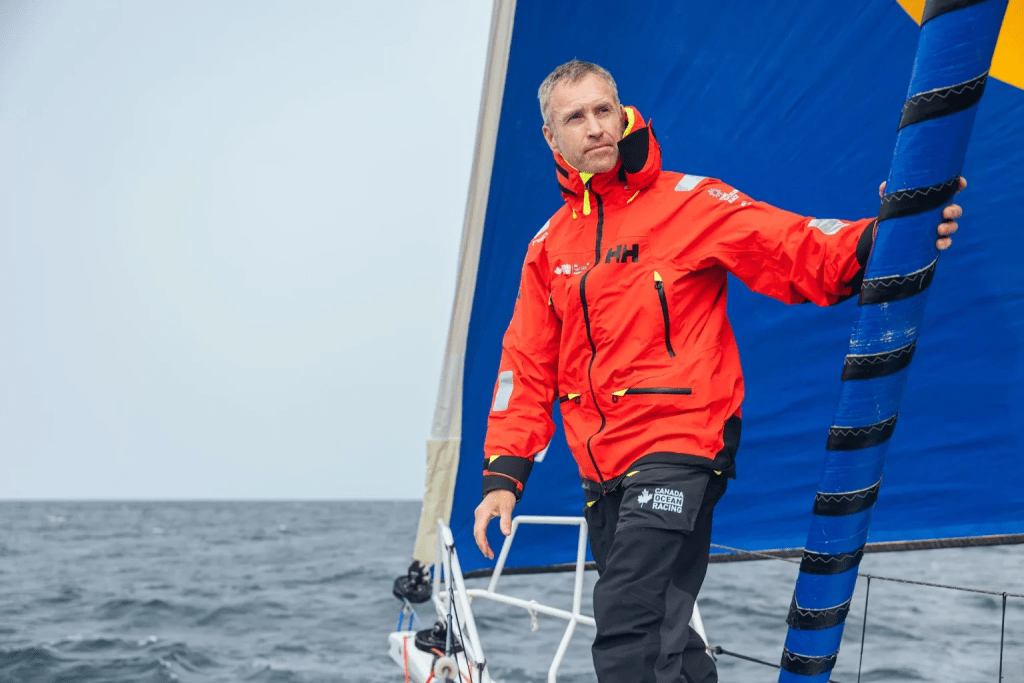
Sport+Eco – Was there a personal experience that pushed you to care more about the environment?
Scott Shawyer: “Growing up, my parents were fairly environmentally conscious. You couldn’t leave a bedroom light on. You couldn’t leave the refrigerator door open for more than a second because my father would remind us about wasting energy. I’ve always been environmentally conscious, and over time it has become more obvious how much harm we’re doing to the environment.
When I was studying engineering at university, nearly 30 years ago, I wrote a paper about global warming. I think I’ve always cared about the environment, but now I’m becoming more vocal because the situation feels more urgent.
What frustrates me is that there is still so much debate when there should be more action. We should stop arguing about what’s causing climate change and focus on fixing it.
“I’m becoming more vocal because the situation feels more urgent.”- Scott Shawyer
Sport+Eco – What is Canada Ocean Racing?
Canada Ocean Racing is a Canadian offshore sailing campaign founded and led by the skipper Scott Shawyer. He said: “I started Canada Ocean Racing to be the platform for my Vendée Globe campaign.”
The organization has three-pillar goals:
1. Become the first Canadian to finish the Vendée Globe.
2. Create a program that continues beyond me as a skipper.
3. Deliver a positive environmental impact through Be Water Positive
What is the Vendée Globe?
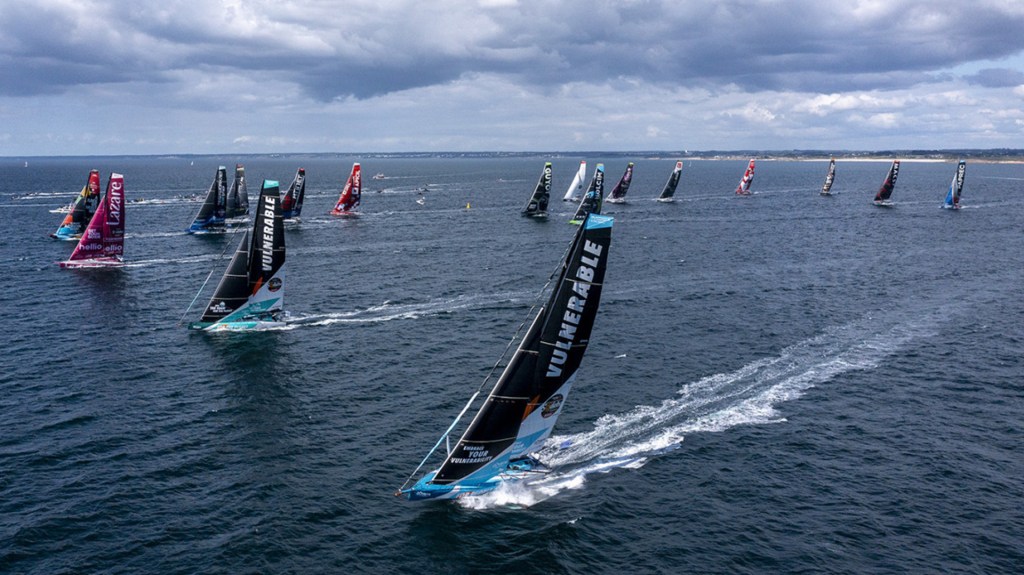
The Vendée Globe is widely considered one of the toughest sporting events in the world: a solo, non-stop, unassisted circumnavigation of the globe. Held every four years, it starts and ends in Les Sables-d’Olonne, in the Vendée department, France. Skippers sail about 45,000 km (approx. 24,000 nautical miles) between 64 days for the fastest to 163 days (64 days is a record established by the French skipper Charlie Dalin during the 2024-2025 edition). So far, no Canadian have been able to complete it.
Behind the bravery of taking the departure of such an extreme adventure, this race is becoming more and more popular towards French people and globally. Skippers are widely followed during the race, we can think of Conrad Colman, who is a strong advocate for sustainability, as he has been racing the Vendée Globe many times without the use of fossil fuel. A bold challenge when many skippers have never completed the race.
What does « Be Water Positive » mean?
Scott Shawyer: “Be Water Positive is a call to action. It means doing more good for watersheds and water systems than the harm we create. Many people have heard of carbon neutrality. Water positive goes beyond neutrality. It’s about actively improving the state of water rather than simply reducing our negative impact.
According to the website: “To Be Water Positive means doing more good than harm to our water systems, replenishing freshwater resources, and tackling the global freshwater crisis head-on.
It’s about protecting and managing our watersheds and rivers, reusing and recycling water where we can, using innovations such as desalination, and stopping pollution at the source. It’s about restoring balance for people and for nature.” – https://www.canadaoceanracing.com/be-water-positive
We want to attract people through sailing and then use that platform to promote environmental responsibility and the Be Water Positive message.
This move aims at addressing freshwater scarcity. It is led by innovators, solution-makers, and pioneers in the water industry such as H2O Innovation and the International Desalination and Reuse Association (IDRA).
Scott Shawyer: “Their mission is to promote desalination and water reuse solutions. A lot of people don’t fully understand the water cycle. Today, municipalities often take relatively clean water from lakes, treat it, send it to our homes, and then return wastewater back into the environment after only partial treatment. If we reused more water instead of continually extracting fresh water, we could reduce pollution and significantly lower energy use.
One of our goals is to educate people about the fact that properly treated recycled water can be safe, potable and environmentally beneficial. »
Sport+Eco – How does this race help educate people on water?
Scott Shawyer: ”During the Ocean Race Europe, we carried a scientific water analysis unit onboard. It collected water samples that scientists could later analyze for contaminants, microplastics and carbon dioxide saturation. For us, our primary role is education and communication rather than scientific research. People come to follow our sailing adventures, and we use that opportunity to share environmental messages.
Behind educating on water, there are multiple ways to be more sustainable and race with a cleaner boat. We ask Scott about the use of fossil fuel. Here is his answer.
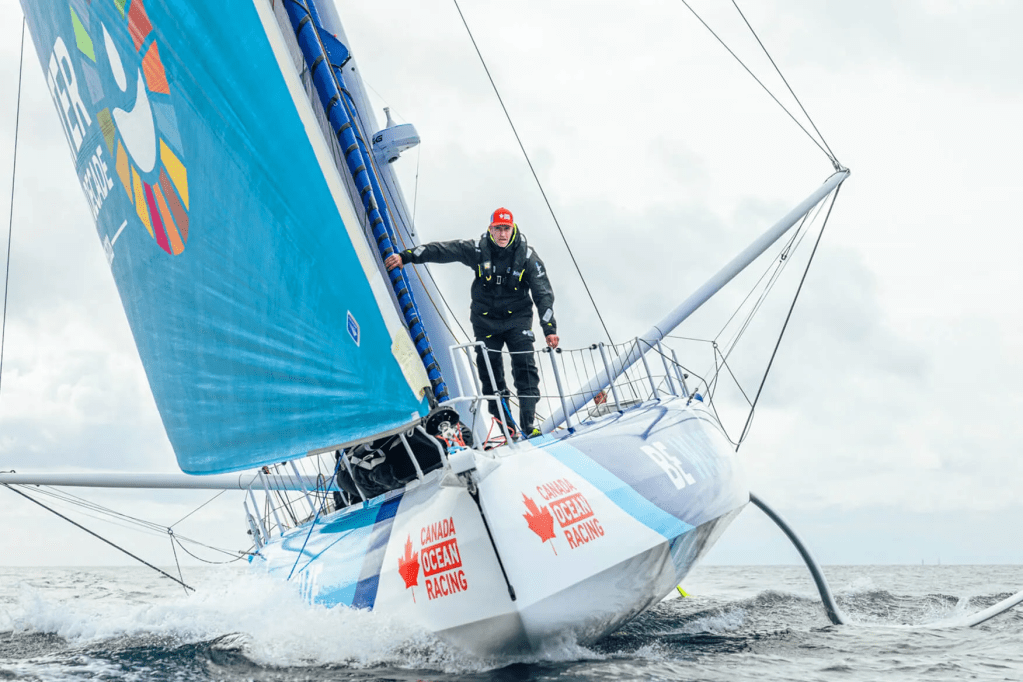
Scott Shawyer: “Our boat was originally built by 11th Hour Racing and was designed with sustainability in mind. We have extensive solar power systems onboard and two hydro-generators that create electricity from the movement of the boat through the water.
We still carry a diesel engine connected to an alternator, but the amount of fuel used is very low.
Interestingly, reducing fossil fuel use is also a performance advantage because carrying less fuel means carrying less weight.
If there are sustainability requirements that create small performance trade-offs, the class can apply those rules to everyone, ensuring a level playing field.”
“The first step is understanding that water is precious and comes at an environmental cost.” – Scott Shawyer
Scott: “One experience that really stands out is when a desalination system onboard stops working. You’re surrounded by water, yet none of it is useful until it can be treated and made drinkable. That really makes you understand how precious freshwater is.
I’ve also witnessed growing sargassum blooms, which are linked to nutrient pollution and warming waters. And I’ve seen increasingly unusual weather systems in the Atlantic.
As sailors, we’re out there with Mother Nature every day, and we can see that Mother Nature is not happy.”
Conclusion
The environment can’t act on its own. That’s why organizations, sports and governments need to be its voice. This can’t be more true about water.
For Scott Shawyer, one lesson stands above all others « You’re surrounded by water, but none of it is useful until it’s treated. That’s when you realise how precious freshwater really is. » As a sailor, in the middle of the ocean, you can be thirsty and still need to process it to be drinkable. As for us, it is easy to go to the kitchen and drink it freely from the tap.
In this Water Month, it is even more important to think about it and make sure we are using the water carefully without wasting it. This is so true when you look at the amount used in sports events. Living in one of the largest freshwater reserves makes us more responsible for protecting it.



Publié par




Votre commentaire