
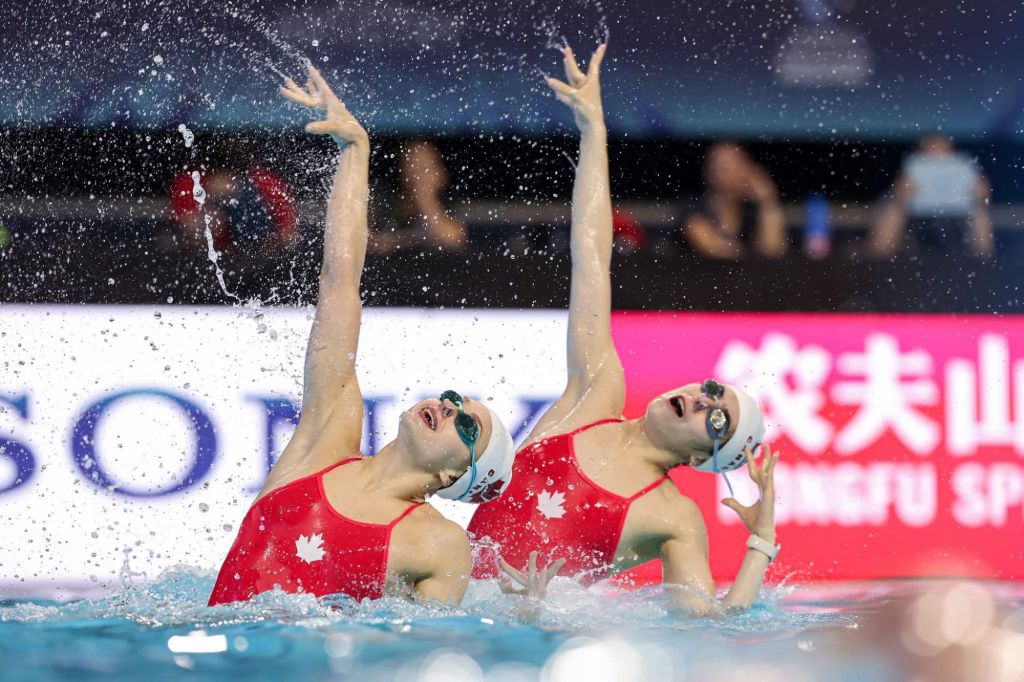
How can a sport reduce its environmental impact without limiting its ability to grow?
This is one of the challenges facing by national sport organizations across Canada. For Canada Artistic Swimming, the answer starts with understanding its footprint and then using that information to guide decisions. To make sure that both strategies work together Canada Artistic Swimming decided to take part in the 2025 National Sport Federation Sustainability Pilot Project. Without surprises travel represent a big part of their footprint through the season. Let see how the NSO is taking actions to reduce their footprint.
This project was launched by the COC with the support of the International Olympic Committee (IOC). Three national sport federations Artistic Swimming Canada, Cycling Canada, and Freestyle Canada benefited from the expertise and support of Racing to Zero to help them develop their sustainability strategies and establish their baseline emissions.
Steve Wallace, CEO of Artistic Swimming Canada, spoke with Sport+Eco about what the federation learned from measuring its footprint, the challenge of reducing travel emissions and how sustainability could become embedded across the sport.
To learn more about this program read this article : https://sportpluseco.com/2025/07/21/au-dela-des-podiums-et-des-records-le-coc-sengage-pour-la-planete/
“Sustainability is about much more than recycling at events.” – Steve Wallace, CEO, Artistic Swimming Canada
SPORT+ECO : You are targeting a 50% reduction in emissions by 2030. What did you learn from measuring your footprint that surprised you the most?
Steve Wallace : « Like many sport organizations that have signed the Sports for Climate Action Framework, we are working toward reducing our emissions by 50% by 2030. The biggest takeaway from measuring our footprint was just how significant travel is. As a national sport organization, we move athletes, coaches, officials and staff across Canada and internationally throughout the year, while also hosting national events across the country. Air travel therefore represents a significant portion of our overall emissions.
Each year, we conduct a comprehensive carbon emissions audit with the support of sustainability consultant Racing to Zero. Measuring our footprint has given us a much clearer understanding of where we can have the greatest impact. It has also reinforced that sustainability is about much more than recycling at events. It needs to influence how we travel, host competitions, select suppliers and make everyday operational decisions. »
SPORT+ECO : How do you plan to reduce the impact of travel while still giving Canadian athletes the opportunity to compete at the highest level?
Steve Wallace : « Our goal is not to reduce competitive opportunities for Canadian athletes. It is to travel more intelligently. That includes hosting more international competition in Canada, combining travel where possible and making more efficient travel decisions.
We could reduce emissions by hosting all of our national events in one or two cities each year, but that would work against another important objective of our hosting strategy. We intentionally take our events across the country, from Victoria to St. John’s, to help grow the sport, engage communities and showcase the strength of our provincial organizations, host cities, clubs and local organizing committees.
For emissions we cannot reasonably eliminate, we have chosen to invest strategically in Canadian carbon offset projects connected to the regions where we host. In 2026, for example, we supported projects in Saskatchewan, Ontario and Quebec, reflecting our event locations in Saskatoon, Toronto, Montreal and Quebec City.
This work is supported by Karbon-X, a Canadian climate solutions company that provides access to verified climate projects and carbon credits. Our partnership allows us to address residual event emissions while directing our investment toward Canadian projects that create benefits closer to the communities in which we compete. »
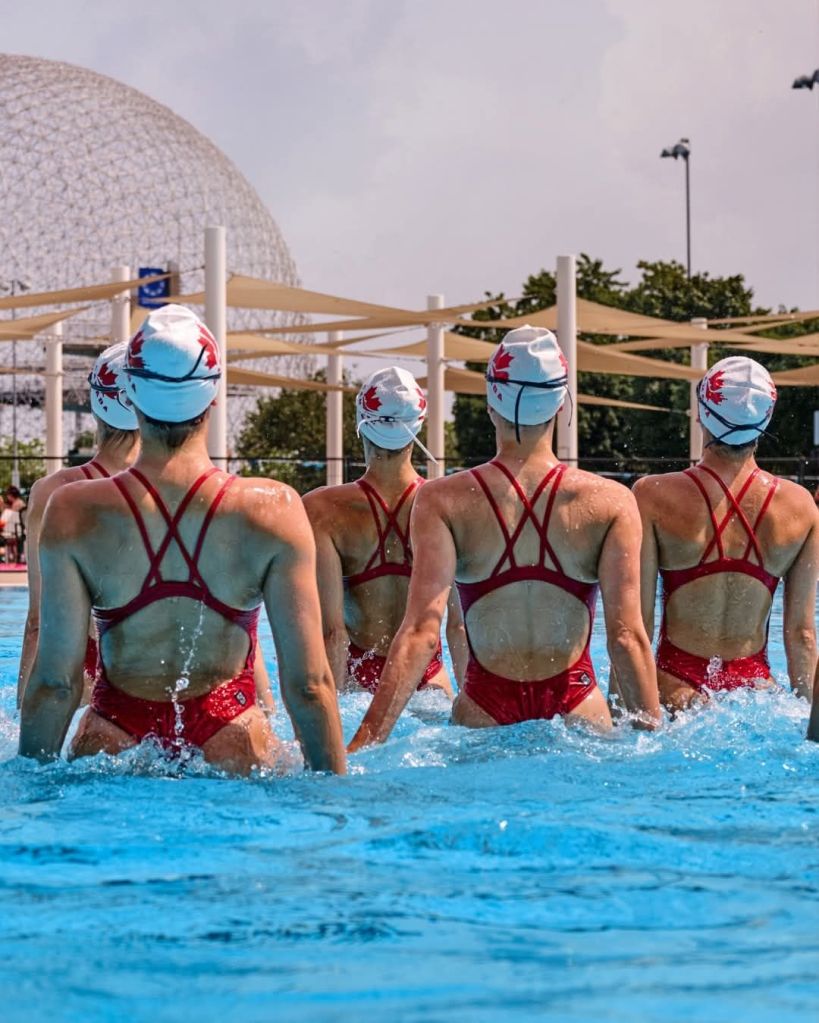
SPORT+ECO : What is one change that you believe could become a standard for all artistic swimming events in Canada over the next five years?
Steve Wallace : « I would like to see a simple sustainability plan and event checklist become a standard part of planning every major artistic swimming event in Canada, including some form of carbon measurement. That could include local procurement, reducing single-use materials, improved waste management, sustainable transportation options and measuring event and travel emissions.
We are already sharing best practices with our provincial and club partners. The long-term opportunity is to make sustainability part of how we routinely plan and deliver competitions rather than something added afterward. If we can embed those practices throughout the sport, the cumulative impact across hundreds of competitions and thousands of participants can be significant. »
Conclusion
Carbon offsets should not replace emissions reductions. For a NSO, the priority should be to first measure its footprint, avoid or reduce emissions where possible.
From air travel and event hosting to procurement and carbon management, Artistic Swimming Canada is now looking at how sustainability can become part of the way the sport operates.
The journey for NSO is long and hard towards sustainability. Growing a sport across a country as large as Canada creates a lot of challenges, but also opportunities to rethink how competitions are organized and how resources are used.
If sustainability becomes part of the planning process rather than an addition at the end, the impact can go far beyond one federation.
Is your sport organization working on sustainability?
Sport+Eco wants to highlight the people and organizations helping build a more sustainable Canadian sport system.
Have a project or initiative to share? Get in touch with Sport+Eco.
Publié par
James Guilbaud







Votre commentaire