
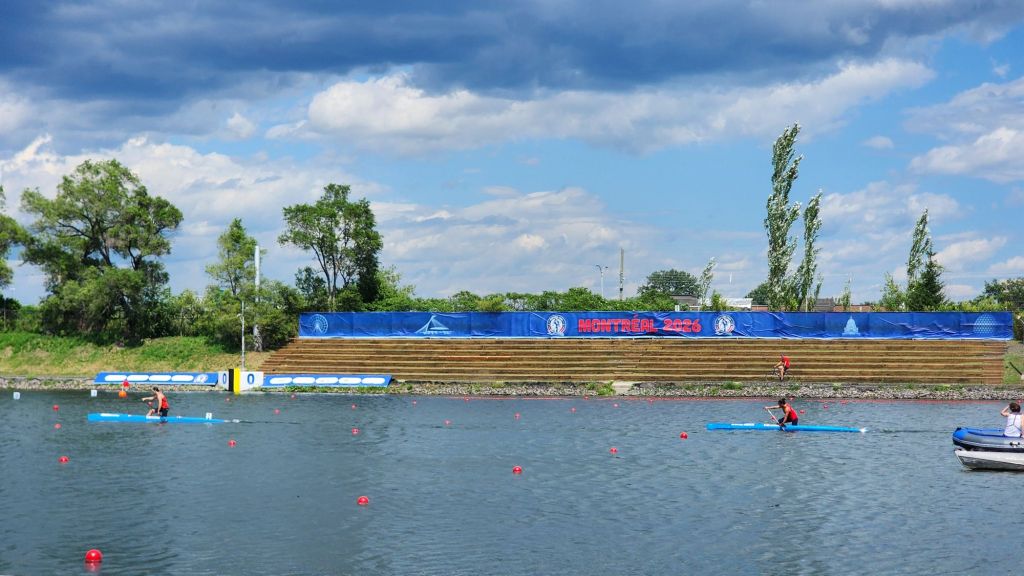
“What was best for the environment was also best for operations and the budget.” said Jeff Feeney, member of Canoe Kayak Canada, the Local Organizing Committee, during the 2026 ICF Canoe Sprint World Cup and Pan American Canoe Sprint Championships in Montréal. Discover all initiatives brought to this event. Every single action was taken to improve the event or find the best solution. It ended up being more efficient and easier than we could have thought, according to Jeff Feeney.
From commitment to adaptation, we have to find ways to improve our sport event by reducing our impact and adapting our strategy with regard to climate change and the impact the weather can have on the result of your event. Jeff Feeney said: “I think it’s just a growing trend in sport event hosting.”
Outdoor sport: where sustainability meets climate adaptation
Paddling sports take place entirely in nature. Every competition depends on the condition of the water, the weather and the surrounding environment. That means organizers must not only reduce the environmental impact of their event but also adapt to the growing effects of climate change.
During the 2026 ICF Canoe Sprint World Cup and the Pan American Canoe Sprint Championships in Montréal, one of the major challenges was air quality, as wildfire smoke drifting from Ontario affected the region throughout the week.
Outdoor sporting events are on the front line of climate change. Heat waves, poor air quality, storms and changing water conditions are becoming operational realities that organizers must increasingly anticipate.
To better understand how sustainability and climate adaptation were integrated into the event, I met with Jeff Feeney, a member of the Local Organizing Committee for both international competitions, held at the Olympic Basin at Parc Jean-Drapeau.
Hosting the event in this venue also marked a symbolic moment and a great way to celebrate the 50th anniversary of the 1976 Olympic Games, which occurred in 1976 at the basin.
When you’re outside instead of inside a gymnasium, you’re constantly seeing the weather, the wildlife and the beauty of the water. It naturally makes you think: ‘ don’t want to make a mess.– Jeff Feeney
Figures – 2026 ICF Canoe Sprint World Cup and Pan American Canoe Sprint Championships :
- 7 consecutive competition days
- +650 athletes
- +60 nations
- 108 events
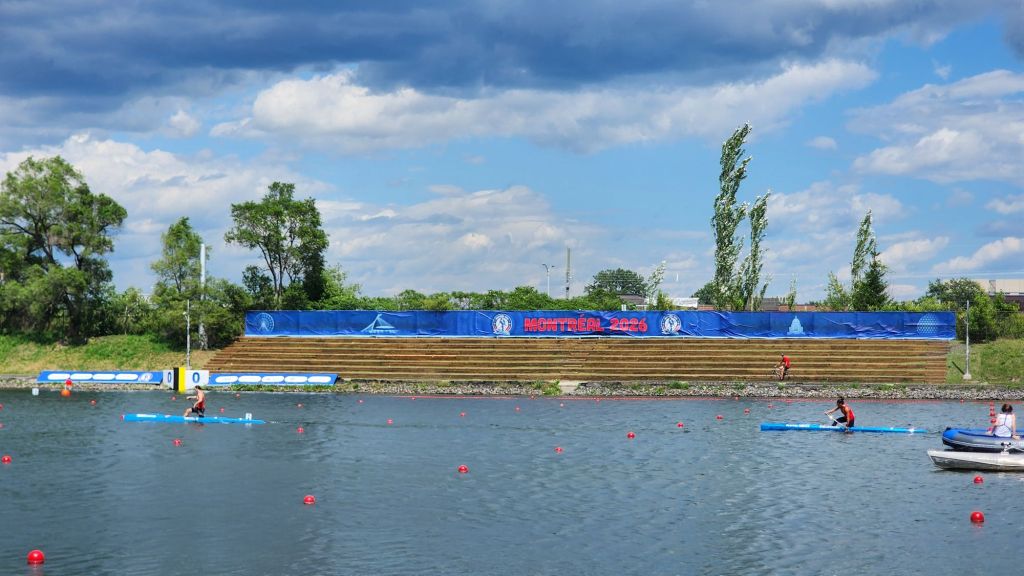
Sustainability starts during planning, not after
Sport+Eco: Why did you choose to implement sustainability initiatives for this event?
Jeff Feeney: “I think it’s just a growing trend in sport event hosting. You want to do what you can to avoid waste, and it only takes a little extra time to think about what happens to something after the event. Then you come up with fun ideas that benefit others afterward. Materials can be used two, three, or four times instead of just once. Some of the things we implemented made me really happy.
The ICF (International Canoe Federation) has this mindset as well. I wouldn’t call it a policy, but they celebrate the water, and their sport happens in nature. They want to be good towards the environment.
They’ve already changed their rules regarding boat motors used during races to reduce emissions. They’re making changes too, and every event contributes in its own way.”
« If you can do something in an environmentally friendly way, please choose that option. » – Jeff Feeney
Finding the « win-win-win »
As mentioned above by Jeff Feeney, implementing sustainability initiatives have had positive and significant outcomes on the budget and operations.
Repurposed
While we visited the venue, Jeff showed me all the initiatives they have implemented to repurpose materials instead of buying them and sending them to the garbage.
- Wood frames for our signs – with wood being repurposed to build a partition wall in the CKC boat hangar for storage of new start Gates. And the remaining wood was donated to the Onake Paddling Club (south of Montreal) for their use in construction new storage shed for boats, equipment, and tools, and to a national team coach who was able to repurpose the remaining amount to build fences on a local farm.
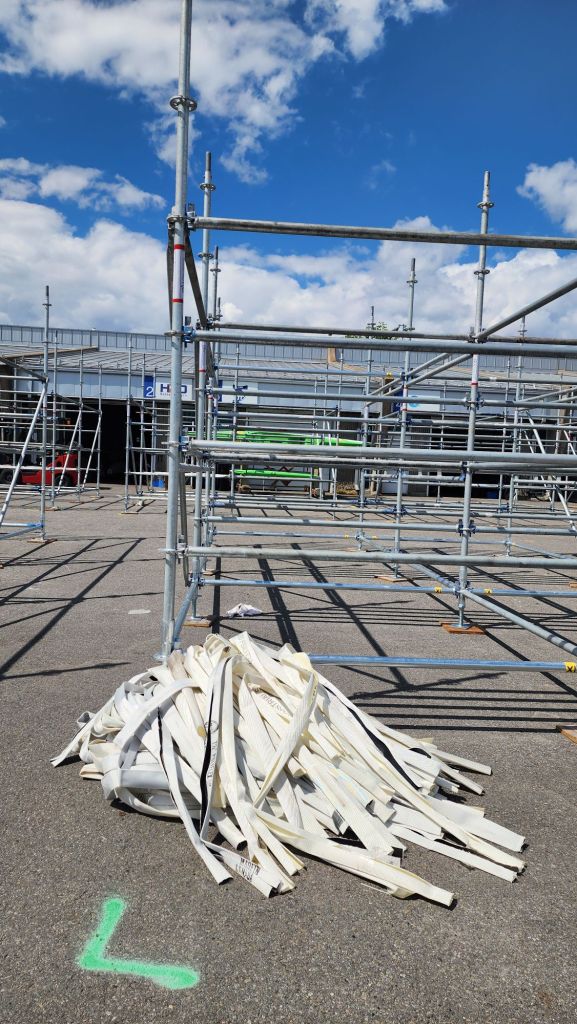
- Repurposed used firehose for their boat rack protectors. As you can see in the photo below, CKC needs to store boats inside scaffolding during the competition. Because the boat hulls are fragile and expensive, it is important to protect the metal bars of the scaffolding structure. In the past, they would buy foam padding that wore out quickly or use single-use plastic. For the event, another LOC member had family contacts at a fire supply company and were able to secure a donation of 6000 linear feet of used fire hose to repurpose in this way. Post-event, these hoses were donated to a number of local clubs for their own permanent boat racks, and to the CKC Alumni committee who will be auctioning of bundles of it at the upcoming CKC Sprint Nationals as part of their ongoing fundraising efforts. This is a great example of giving material new life, and diverting items from the landfill that can still be useful in a different way.
- Reusable tents and scaffolding for the majority of our temporary installations outside. According to Jeff, should we look to do this event on a recurring basis, “We’d also invest in permanent solutions like foldable boat racks that could later be donated to local clubs instead of rebuilding temporary infrastructure every time.”
- Mobility :
- The majority of participants used the metro, which was actually a really big hit according to Jeff Feeney and all participants. Most of the kayak basin in these sizes are isolated from the city and need shuttles. Having an Olympic basin connected to the city by the metro had a positive outcome on participants’ experience, which had more freedom on their schedule.
- On site, instead of using gas-powered golf carts and vehicles, organizers relied on electric golf carts, and bicycles to get around the venue. Coaches also followed their athletes on the 1000m course by renting electric scooters and bicycles.
- Working with a sustainable caterer: All the food was served on compostable plates and with compostable cutlery for meals. In Montréal, all cardboard containers and wooden utensils that have been in contact with food and are therefore considered contaminated can be composted. Parc Jean-Drapeau provides a composting service, along with bins for collecting organic waste and compostable materials.
- No generators were used at all.
- EV Van for our TV production side- by-side cam.
Sport+Eco: You decided to host two international competitions consecutively instead of requiring teams to travel elsewhere. Why was that important?
Mutuality: This is an important subject, we would like to take time to talk about.
According to Jeff: “It comes back to doing what’s best for the environment, operations, and the budget. Everyone was already coming to Montréal. Many countries would normally have had to travel to another city for the Pan American Championships. Hosting the 2nd competition immediately after so that countries did not need to travel to a separate city. Instead, Canada simply added the Pan American Championships after the World Cup.”
More advantages :
- The course was already prepared, avoiding the need to rebuild another venue.
- The boats were already here;
- Technical officials, Canoe Kayak Canada staff, and volunteers were already here;
- That saved everyone money;
It also eliminated hundreds of flights and avoided transporting containers full of boats elsewhere. Knowing that travelling and logistics are part of the scope 3 and always represent most of the environmental carbon footprint.
Again, it was another situation where what was best for the environment was also best for the sport and for operations.
Read article Mutualisation : La mutualisation, l’une des solutions les plus inspirantes pour 2026 dans le domaine des événements sportifs? – Sport+Eco
« What was best for the environment was also best for the sport, the budget and the operations. » – Jeff Feeney
Respecting the water beyond competition
Sport+Eco: Water is at the heart of paddling sports. How do you raise awareness about protecting it?
Everything important here happens on the water, so it’s naturally connected to the competition. We have to take care of it by controlling weeds, monitoring bacterial levels, and making sure it’s safe for people. There’s a dedicated team looking after the water.
The boats we use, the motors we choose, and the reduced fuel consumption all reflect our respect for the water.
The ICF is also promoting a campaign called Planet Canoe, which connects the sport with the planet. They want canoe and kayak to be recognized as a sport that truly considers the environment.
When you’re outside instead of inside a gymnasium, you’re constantly seeing the weather, the wildlife, and the beauty of the water. It naturally makes you think: « I don’t want to make a mess. I don’t want garbage trucks coming here every day. »
Even subconsciously, you become more aware because you’re surrounded by nature and want to keep it pristine.
« Everything important here happens on the water, so protecting it is part of the sport. » – Jeff Feeney
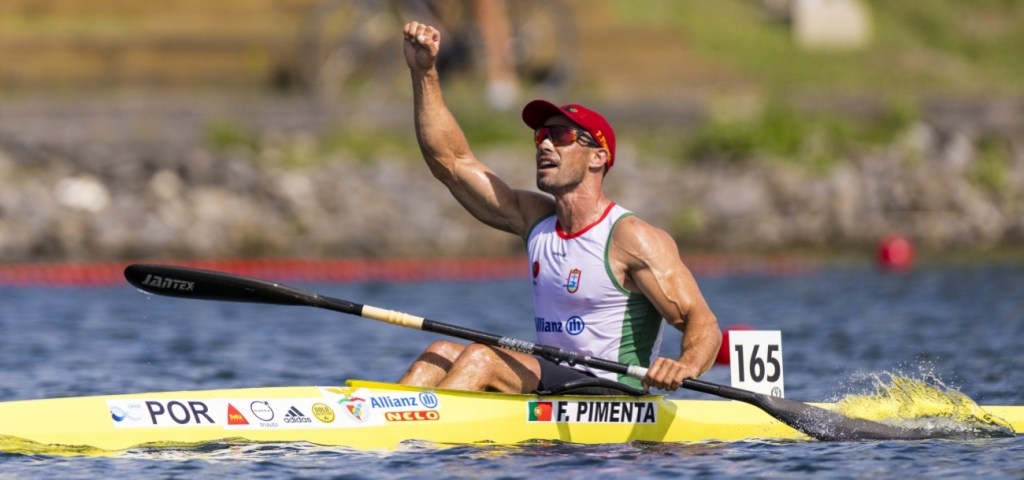
Climate adaptation is now part of event management
Sport+Eco: How did you prepare for heat waves and extreme weather?
Jeff: “During the competition, we adjusted the competition schedule to finish earlier because of the weather and the hurricane. We also made sure there were shaded areas, air-conditioned spaces, and plenty of water refill stations.
Our responsibility isn’t only the athletes. It’s also the volunteers, staff, officials, and everyone working at the event. Athletes generally know how to take care of themselves. Our job is making sure everyone else has what they need and that people don’t overheat. »
Sport+Eco: With increasing wildfire smoke and climate impacts, do you have standards regarding air quality?
Jeff: « We rely heavily on local authorities. We have a complete medical and safety team that monitors storms, air quality, and any medical emergencies on the water.
Safety is built into every event plan. The team constantly monitors weather systems, smoke indexes, and communicates in real time to make decisions.
I don’t know the exact air quality threshold, but we follow the local municipal guidelines. The ICF doesn’t impose its own air quality standard because local authorities are responsible for public health. »
If you had unlimited resources, what would you do next?
Sport+Eco: If you had unlimited budget and more preparation time, what sustainability initiative would you add?
Jeff: “I actually think we accomplished a lot this year with limited time and budget. One thing I’d like to improve is reusable plates and dishware. I’d also like dedicated teams helping people properly sort compost, recycling, and landfill waste instead of relying entirely on the honor system.
If we knew we were hosting the event for several consecutive years, we’d print materials that could be reused for multiple editions instead of putting a year on everything. We’d also invest in permanent solutions like reusable boat racks that could later be donated to local clubs instead of rebuilding temporary infrastructure every time.
Overall, though, I’m proud of what we achieved:
- hosting multiple competitions together;
- encouraging Metro use;
- reducing waste;
- reusing materials whenever possible. »
Conclusion
The interview highlights an important evolution in sport event management. Sustainability is no longer just about reducing environmental impact it is becoming a way to improve operations, reduce costs and create a better experience for participants.
Jeff said, « Don’t react afterwards. Build sustainability into the front end of your planning. »

Publié par



Votre commentaire